
Navigating this geopolitical minefield requires a cold-blooded blend of immediate tactical pleading, structural domestic diversification, and aggressive collective resistance, suggests Ambassador Rajasekhar.

Workday, a global HR tech major, has unveiled its new AI platform, Sana, designed to automate human resources and finance functions. Chairman and CEO Aneel Bhusri stated that AI is likely to replace low-cost, outsourced jobs due to increased productivity, rather than leading to jobs moving out of first-world countries. The platform uses AI agents for tasks like payroll and compliance, and Workday has acquired C1.ai to manage access rights for these agents. Bhusri emphasised that AI should augment humans, redefining roles rather than replacing them entirely.

Indian benchmark indices, Sensex and Nifty, experienced declines in early trade due to a significant surge in crude oil prices, exacerbated by escalating tensions in the West Asia. Track how Sensex, Nifty fared on July 23.

Jio Platforms Limited (JPL) believes satellite broadband services are unlikely to achieve significant scale or compete effectively on price in India's highly connected and affordable market, despite developing its own satellite constellation solutions and flagging it as a potential disruptor.
Cisco Chairman and CEO Chuck Robbins announced plans to expand the company's silicon design team in India, citing the country's pro-growth strategy, scale, ambition, and engineering focus as key reasons for its strategic importance.

Indian refiners are diverting 350,000 tonnes of sugar, originally slated for export, to the domestic market to ease a supply crunch and stabilise prices ahead of the festive season.

Indian benchmark indices Sensex and Nifty rallied in early trade, primarily driven by strong buying in IT stocks after Tech Mahindra reported a significant 28.4 per cent rise in its consolidated net profit for the June quarter.

Gold futures experienced their seventh consecutive daily decline, falling to Rs 1.5 lakh per 10 grams, driven by escalating military exchanges between the US and Iran which have pushed oil prices higher and intensified concerns over inflation and potential interest rate hikes.

Elon Musk has renewed his criticism of Mukesh Ambani regarding Starlink's entry into India, accusing Ambani's supporters of hypocrisy for simultaneously claiming Starlink can't compete with low prices and that it poses a strong competitive threat. Musk argues that competition would benefit Indian consumers and that Starlink would adjust pricing if too expensive. He also shared reports alleging Reliance-funded political donations. Communications Minister Jyotiraditya Scindia stated India does not permit monopolies and that multiple players, including Starlink, have received satcom licences.

US Secretary of State Marco Rubio is on a three-day visit to India to discuss bilateral ties in energy, trade, investment, defence, and critical technologies, as well as the West Asia crisis. His visit aims to strengthen the India-US Comprehensive Global Strategic Partnership amidst existing friction, with a focus on finalising a proposed bilateral trade deal.
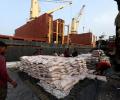
India's exports saw a significant increase of 26.12 per cent to USD 43.81 billion in August, leading to a narrowed trade deficit of USD 26.86 billion, driven by strong demand from key global markets and diverse sectors.

For the first time, co-working spaces have surpassed the IT/ITeS sector as the largest occupier of office space in India during the January-September period, indicating a significant shift towards flexible workspaces, according to Anarock Research & Advisory.
Indian benchmark indices Sensex and Nifty experienced declines in early trade, driven by a surge in Brent crude oil prices above USD 91 per barrel due to escalating tensions between Iran and the US, alongside an increase in US 10-year bond yields. Track Sensex, Nifty on August 18.

India has exhausted 58.04 per cent of its FY27 fertiliser subsidy budget in under five months, primarily due to a significant surge in global urea prices following the conflict in West Asia, necessitating potential additional government expenditure.

Indian benchmark indices Sensex and Nifty experienced a downturn in early trade, primarily influenced by a dip in HDFC Bank shares, persistent outflows from foreign funds, and escalating geopolitical tensions between the US and Iran. Track Sensex, Nifty performance.

US Secretary of State Marco Rubio visited Reliance Industries' Jamnagar refinery, a day after calling India a crude oil refining 'superpower', and met with top Indian business leaders Gautam Adani and N Chandrasekaran to advance bilateral ties in energy, trade, investment, and defence.

Volkswagen, a long-standing but minor player in India's fiercely competitive automotive sector, is now exploring a strategic partnership with the JSW group, aiming to revitalise its market presence, enhance profitability, and potentially establish India as a key export hub for electric vehicles.

Indian benchmark indices, Sensex and Nifty, saw early gains driven by lower crude oil prices and buying in Reliance Industries, even as the Reserve Bank of India maintained its benchmark policy rate for the fourth consecutive meeting, reinforcing confidence in the domestic economy.

Indian benchmark indices, Sensex and Nifty, closed nearly flat on Thursday, influenced by the US Federal Reserve's interest rate hike and indications of further monetary tightening. Despite some intraday gains, caution prevailed, with foreign institutional investors continuing to offload equities. Meanwhile, the National Stock Exchange of India's (NSE) mega initial public offering opened for subscription, garnering 39 per cent subscription on its first day.

Finance Minister Nirmala Sitharaman stated that the Reserve Bank of India (RBI) will persist in its efforts to prevent excessive volatility in the rupee, which has significantly depreciated against the US dollar due to global uncertainties, despite India's strong macro-economic fundamentals.
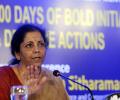
Union Finance Minister Nirmala Sitharaman has urged significant investment in AI infrastructure, semiconductors, and quantum technology, identifying them as India's next major growth frontiers. Speaking at an IIT Madras Alumni Association event, she emphasized the need to build hardware, skills, and institutional ecosystems to harness these technologies, countering perceptions that India is lagging in AI. Sitharaman also highlighted the potential for increased investment in defence production, particularly in unmanned systems and drones, stressing collaboration between academia and industry.

Elon Musk has escalated his criticism of Indian industrialist Mukesh Ambani, sharing media reports that alleged Reliance-funded firms helped boost BJP campaigns on social media and made large political donations. This comes amidst a persistent delay in the launch of Starlink satellite broadband services in India, with Musk accusing Ambani of protecting a monopoly. The Indian government maintains its telecom framework is fair and non-discriminatory, while Reliance has not publicly responded to Musk's allegations.

Industry leaders at MRAM Expo 2026 highlighted that India's maintenance economy has the potential to unlock a 1 per cent GDP opportunity. This growth can be achieved by addressing productivity losses from equipment breakdowns, unplanned downtime, and inefficient assets through smarter asset management practices. The NITI Aayog also supports AI-based predictive maintenance for resilient infrastructure, while the Indian Asset Performance Management market is projected for substantial growth by 2033.

Foreign institutional investors have withdrawn nearly $40 billion from Indian equities in the last two years and, according to Bernstein analysts, have 'little reason' to invest for the long-term, though they may 'return to trade'. The brokerage highlights challenges such as struggling large-caps, disruption from new technologies, and difficulties accessing small- and mid-caps (SMIDs) at an institutional scale.

The Brics proposal for a Grain Exchange, aimed at challenging the dominance of Western trading firms, faces significant operational and implementation hurdles, including settlement currency, regulatory frameworks, and limited participation from key members like India, according to experts.

From the Sensex firms, Infosys, Tata Consultancy Services, HCL Tech, Tech Mahindra, Tata Motors, Sun Pharma, Maruti and Titan were among the major gainers. Bharat Electronics, Asian Paints, Bharti Airtel and ICICI Bank were among the laggards.

Indian benchmark indices Sensex and Nifty saw a significant rebound in early trade, driven by a sharp decline in crude oil prices and easing geopolitical tensions in the West Asia, which improved market sentiment and reduced inflation fears. Track Sensex, Nifty on July 27.

Indian benchmark indices, Sensex and Nifty, experienced a significant downturn as escalating tensions in West Asia led to a sharp surge in crude oil prices, coupled with fresh foreign fund outflows and a weakening rupee.
Indian benchmark indices Sensex and Nifty experienced a significant slump in early trade, driven by escalating tensions in West Asia and a sharp rise in crude oil prices, alongside a bearish trend in other Asian markets.

The Indian stock market experienced a significant downturn, with the Sensex crashing over 1,000 points and the Nifty hitting a fresh 52-week low, driven by sustained selling from foreign institutional investors, the RBI's monetary policy tightening, and elevated Brent crude prices.

India's exports saw a significant 23 per cent increase, reaching USD 44.4 billion in September, while the trade deficit narrowed to USD 30.21 billion, according to recent government data.
Indian benchmark indices Sensex and Nifty saw a significant rebound in early trade, driven by softer-than-expected US inflation data which has reinforced expectations of a less aggressive monetary policy stance from the Federal Reserve, providing relief to global risk assets.
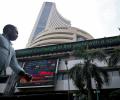
Indian benchmark indices, Sensex and Nifty, saw early gains, primarily driven by IT stocks, amidst expectations of a less aggressive monetary policy from the US Federal Reserve following softer inflation data. Global market trends and upcoming Q1 results are also influencing investor sentiment. Track Sensex, Nifty on july 16.
GE Aerospace is set to significantly increase its supply chain spending in India, targeting USD 400 million by 2030, up from USD 200 million in 2025. This expansion reflects the company's commitment to India's burgeoning aviation market, driven by substantial aircraft orders and the strategic importance of its manufacturing and technology centres in Pune and Bengaluru.
Indian benchmark indices, Sensex and Nifty, experienced significant declines, with the Sensex falling 493 points and the Nifty dropping for the sixth consecutive day, primarily due to elevated crude oil prices reaching USD 91 per barrel and diminishing hopes for a diplomatic resolution in West Asia.
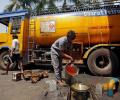
The Reserve Bank of India has opened a special dollar window for three public sector oil marketing companies (OMCs) to meet their daily dollar requirements, aiming to curb the rupee's depreciation amidst global economic uncertainty. Additionally, the RBI has introduced new regulatory measures for the foreign exchange market, including reducing the threshold for derivative transactions without underlying exposure and introducing a Foreign Exchange Risk Reserve (FERR).

Mercedes-Benz India's Managing Director & CEO Santosh Iyer stated that demand continues to outstrip supply, particularly for the CLA electric vehicle, with over 1,000 orders and deliveries extending to March-April 2027. The company could have sold an additional 1,000 vehicles if supply had been adequate.

WazirX founder Nischal Shetty stated, "We have outdone ourselves, but it is a journey we are still on, and there is a long way to go," reflecting on the cryptocurrency exchange's year-long journey since restarting operations after a cyberattack and restructuring.

Indian stock market benchmark indices Sensex and Nifty rebounded in early trade, driven by a decline in crude oil prices, supportive global cues, fresh foreign fund inflows, and buying in blue-chips like Reliance Industries and HDFC Bank. Track Sensex, Nifty movement on June 22, 2026.

Luxury car buyers in India are spending lakhs -- and sometimes crores -- to make their cars truly their own, turning personalisation into a growing business opportunity for automakers.
